

The EDS Lass writes about life with EDS, articles on relevant topics and her medical journey.
RECENT POSTS



Categories
Tags
Amélie art Croatia Diagnosis Diagnosis denied EDS Exploring Finland Food France health Healthcare System Issues hEDS Helsinki Holiday Home human-rights Hvar Ileostomy Infection informaion informed-consent Island law Lido life Lifestyle Mallorca Medical Mesenteric Ischemia NHS Failure Nostalgia Pairs Paris PoTS Recipe Rest rights Sea Sun Surgery Swimming travel Undiagnosed infection Visceroptosis
When I was twenty, my lung collapsed. A spontaneous pneumothorax (collapsed lung) can be serious an even fatal. The response from medical staff was my first significant experience of the danger of assumptions and gender bias. It was assumed I was having a panic attack (psychological origin), rather than phyical, medical health issue.
I had a spontaneous pneumothorax (lung collapse), of my left lung when I was twenty. In the evening I had experienced chest and back pain. It increased to severe. I had studied anatomy and physiology, and due to the pain, location and severity, I thought for a short period of time that I was having severe heart issues. I remember still, so clearly, being calm and practial, choosing to focus on happy memories so they were my last thoughts; as I thought I may stop living at any point. After more minutes it became physical difficult to breath and therefore I considered then, with great relief, that this was lung, not heart.
In a short period of time breath was so difficult that I can not speak at all. Emergnecy services was contacted via 999 and an ambulance was sent.
“Don’t worry love, it is just a panic attack“
The ambulance crew attended and quickly assumed nothing was wrong. I was given a false reassurance that nothing was wrong. I remember so clearly being told this sentence; “Don’t worry love, it is just a panic attack“. I remember so clearly hearing those words and consequently realising that I was in trouble; not only was there something biologically very seriously wrong, but that the medical staff had no idea there was a problem, as they assumed otherwise. In the ambulance I continued to try to breathe.
At hospital I waited for over an hour struggling to breath. I knew that the ambulance crew who handed me over would have told staff that I was brought in due to a panic attack.
Sitting, trying to breath, realising how dangerous assumptions were, it was clear to me that even if one is located in a hospital during a serious medical issue, patients will not get investigation or healthcare unless the staff consider that the young female patient may be unwell. I felt unsafe, because, until they apply any diagnositc thought, I was unsafe.
“Don’t worry!”
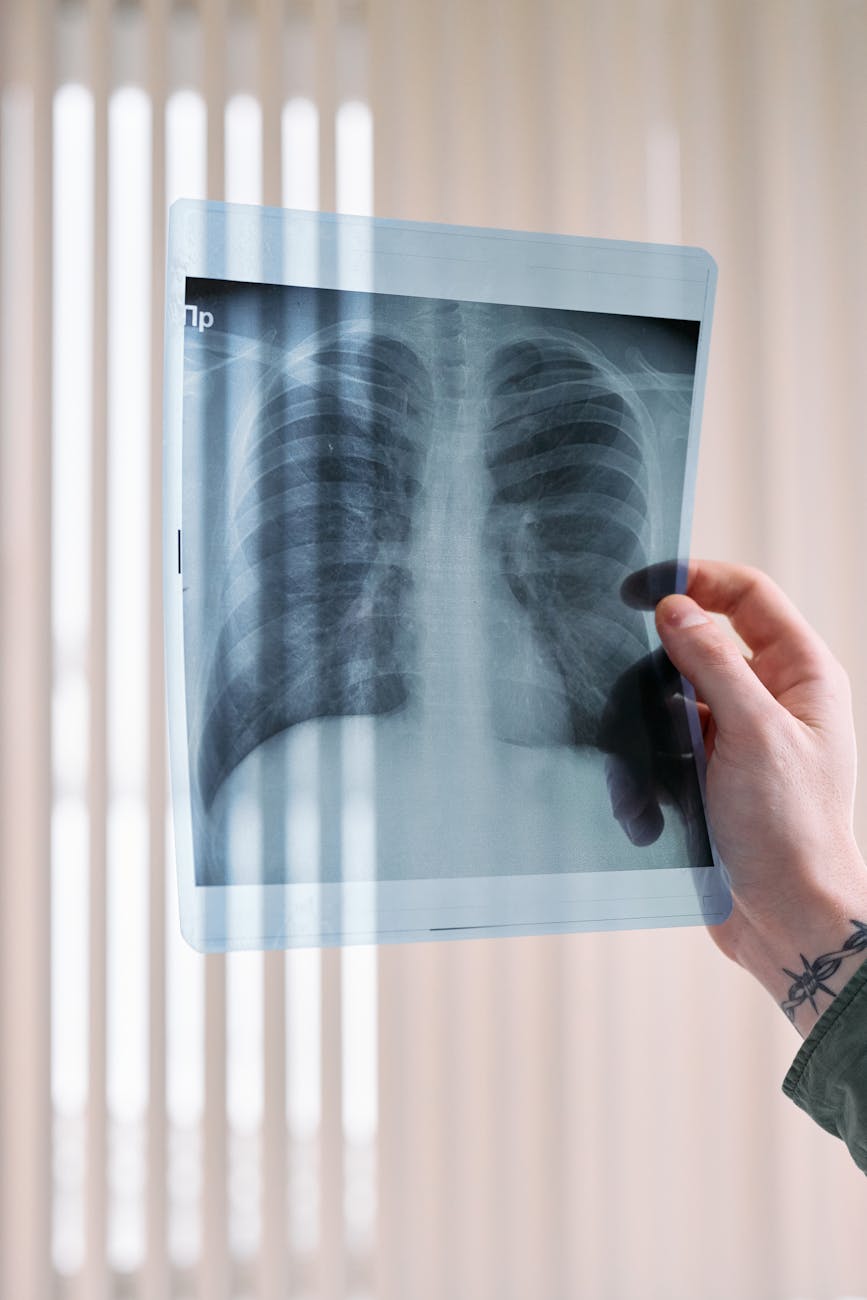
Finally, staff listened to my chest, and seemed to be concerned and an xray was done. They realised it was a lung collapse, and the situation changed instantly. They were in such a rush to get a chain drain they were speaking very quickly. One staff member leant over me and, in a paniced and hurried manner, said “don’t worry!” while they worried. I simply continued to struggle to breath while reflecting on the ironly that I was being told again that I need to calm down.
The chest drain was inserted. A tube was pushed into my my left side, in order to let the air, which had escaped from the collapsed lung, come out to enable the lung to reinflate.
While I waited to be admitted to a ward, one of the ambulance crew came to my cubicle. He simply said “we heard it was a spontaneous pneumothorax”. I simply replied “yes”. At the time I didnt have the words to either ask why he was so sure it was psychological, or to request that he nor his colleague not make assumptions in the future, nor to say how terrifying the assumption was in the circumstances. This experience had been yet again an example of when a medical professional, rather than consider the individual, had instead considered what was ‘most likely’. This alone means EDS patients are disadvantaged.
I was in hospital for 5 days while my lung slowly reinflated. I had a number of xrays over those days to check the progress. I was in a respiratory ward, with three other, much older, women.
Despite a spontaneous pneumothorax being a possible indicator of EDS, the condition was not considered as an underlying condition which caused the collapse. Interestingly, my medical notes, obtained later via Subject Access Request, showed that a respiratory consultant had considered Marfans (another connective tissue disorder). So near but so far! EDS was not considered and an opportunity for diagnosis was missed, again.
 The EDS Lass